
Most tractor parts suppliers in Malaysia stock the same thing: parts for the models sold in the last five years. Walk into a Kubota dealer and ask for a clutch disc for a 2004 L4400 or an injector pump for a 1998 M9000, and you'll often get the same answer — "Sorry, not available" — or a price that makes the part feel like it came from a museum vault.
This is exactly the gap we built our business to fill. This post explains how we actually find, source, and verify parts for older Kubota tractors — the ones with 15, 20, even 25 years of Malaysian paddy fields behind them.
Why Vintage Kubota Parts Are Hard to Find (But Not Impossible)
Kubota Malaysia officially supports parts supply for models within the standard service window — typically 10 years from last production. After that, parts are progressively discontinued from the local catalogue.
But here's the thing: Kubota has sold tractors in Malaysia since the late 1970s (originally through Sime Kubota, the joint venture with Sime Darby). Many of the models from the 1990s and 2000s — the M9000, M9540 (old generation), L4400, L3408, L3608, and B5200 — are still running in paddy fields across Kedah, Kelantan, Perak, and Johor. Our estimate puts the total Kubota fleet still operating in Malaysia at well over 10,000 units, with a significant proportion over 10 years old.
Those tractors need parts. The demand is real — the local supply chain just hasn't caught up.
Source #1: The Japan Secondary Market
Japan has one of the most developed used agricultural machinery markets in the world. Tractors that are retired from Japanese farms often have low actual hours — Japanese farmers are known for meticulous maintenance — and arrive in Southeast Asia via auction or direct import.
More importantly, Japan's used parts ecosystem is extensive. Dismantled tractors generate genuine Kubota parts that are often indistinguishable from new — seals, clutch assemblies, PTO shafts, hydraulic pumps — at a fraction of the cost of new parts.
We maintain relationships with two dismantlers in Fukuoka and one in Saitama who specialize in Kubota agricultural equipment. When a customer calls us with a hard-to-find part number, Japan is usually our first call.
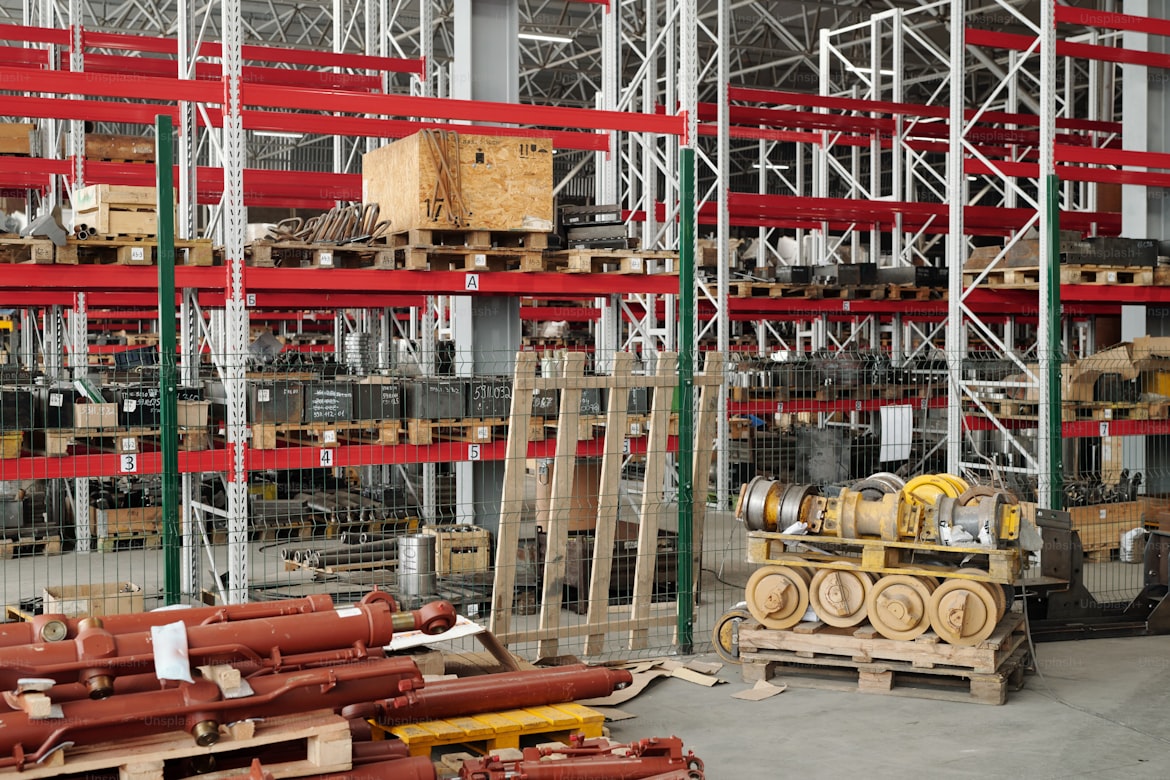
Typical lead time: 10–21 days air freight.
Source #2: OEM-Compatible Aftermarket from China and Taiwan
This is the most misunderstood segment of the market. "Aftermarket" has a mixed reputation, and for good reason — there are low-quality imitations that will fail quickly. But there is also a substantial tier of manufacturers — predominantly in Jiangsu and Zhejiang provinces in China, and several factories in Taiwan — that produce parts to OEM tolerances using the same raw materials as the genuine parts.
How do we distinguish good aftermarket from bad?
- Material specification. A clutch disc for a Kubota M9540 should use a specific friction material grade. We request material certificates.
- Dimensional verification. For critical components — crankshafts, bearing races, hydraulic valves — we measure against a known-good genuine part before stocking.
- Track record. We have a shortlist of suppliers whose failure rates we've tracked over three years. We only reorder from suppliers with a field failure rate under 2%.
Good-quality aftermarket parts for older Kubota models can cost 40–65% less than genuine parts, with comparable service life. For a tractor that's already 15 years old, this is often the right economic decision — but it depends entirely on the component and the supplier.
Source #3: Cross-Model Compatibility
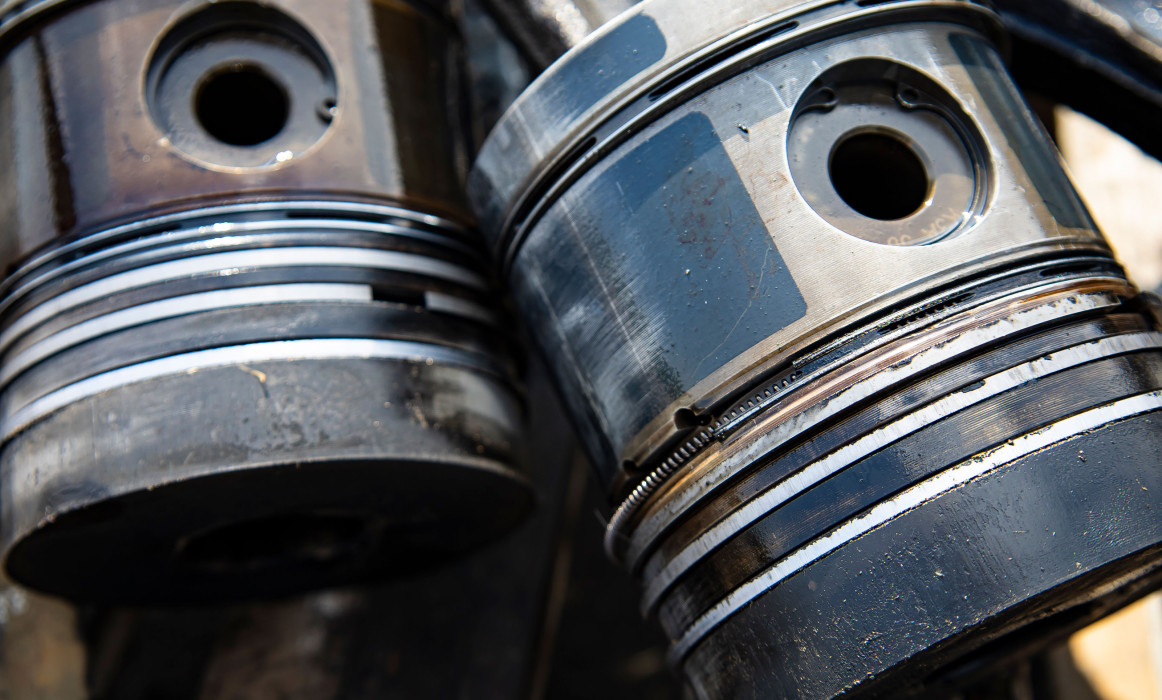
This is where knowing the Kubota parts catalogue deeply pays off. Many Kubota components were used across multiple models and multiple generations. The TD030-12010 bevel gear, for example, fits the L3408, L3608, L4018, L4400, L4508, L4708, L5018, and M5000 — eight different models across more than a decade of production.
When a part is discontinued for a specific older model, we check for compatible equivalents in currently-produced models. If the specification matches, the part will fit. This keeps older tractors on the road using parts that are still actively manufactured.
We maintain an internal cross-reference database covering over 2,000 Kubota part numbers and their compatibility across models.
Source #4: Dismantled Units in Malaysia
There is a small but active market for Kubota tractors that are beyond economic repair — damaged beyond recovery, or retired after 30+ years of service. These units, when dismantled properly, yield a large number of serviceable used parts.
We have three regular contacts who harvest parts from end-of-life tractors across Peninsular Malaysia. It's not glamorous sourcing, but for rare items — specific hydraulic housings, transmission cases, specialty brackets — it's sometimes the only option.
Every used part we sell from this source is cleaned, inspected, and tested before it leaves our hands.
What This Means for You as a Kubota Owner
If you have an older Kubota that a mainstream dealer has told you is "too old to find parts for," that's not the end of the road — it's just the end of the standard supply chain.
The older the model, the more likely we are to have a sourcing path for it, because we've built the network specifically for this purpose. We've sourced parts for:
- Kubota M9000 and M9540 (early 2000s models) — still very common in northern Malaysian paddy states
- Kubota L3408 and L3608 — popular throughout the 2000s, millions of units across SE Asia
- Kubota L4400 and L4200 — the workhorse of many small farms from 2002 to 2012
- Kubota B5200 and B2920 — compact models still operating on smaller plots
Our process is simple: tell us the model, the part name or part number if you have it, and as much context as you can (which system, what failure mode, what you've already tried). We'll come back to you with availability and pricing — usually within 24 hours.
One Final Thing: Photos Help Enormously
If you're not sure of the part number, a clear photo of the failed part — front and back, with something for scale — saves significant time. We can usually identify a component from a photograph and match it to a part number within a few minutes.
Send photos via WhatsApp — it's the fastest way to get a response.